 | Setting Equipment Prices That Reflect Market Reality | | A seller lists a mid‑size excavator at a price tied to the original invoice and a hoped‑for margin. A prospective buyer asks for the serial number, recent oil analysis, and undercarriage photos. Silence follows. The listing sits. Offers arrive months later at auction prices far below the original ask. That sequence repeats across the market because listing price and market value are different animals. Start with hard comparables Professional buyers benchmark against recent auction hammer… | | Read more | | |
|
| |
Fleets Plan Bypass Around the Whole Network, Not Just the Easy Parts - TT |  | | Transport Topics News • PrePass • Jun 15, 2026 | | # Summary
Fleets are shifting bypass strategy from targeting individual easy-to-access weigh stations to optimizing consistent bypass performance across their entire operating network, accounting for varying state regulations and enforcement patterns. PrePass's Mile Marker 2026 data shows a single bypass saves approximately 7 minutes of drive time, half a gallon of fuel, and $10.65 in operational costs—with a 250-truck fleet potentially recovering 7,583 hours and $692,250 annually. Fleets increasingly use both mobile app-based and transponder-based bypass methods together to maximize coverage across high-volume staffed stations and broader networks, ensuring steady results rather than sporadic time savings. | | Open Article | | |
|
| |
Colorado River Agencies Test Framework for Interstate Water Exchanges | 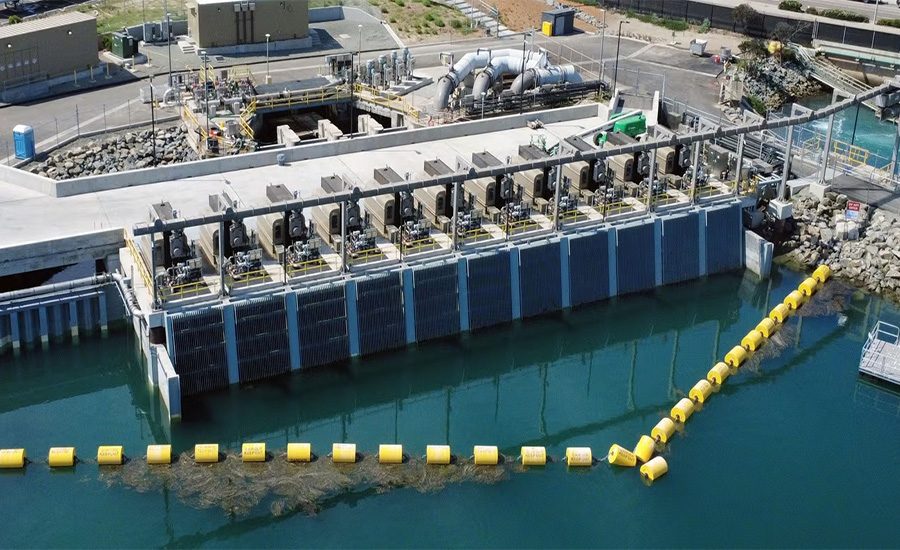 | | Engineering News-Record (ENR) • Jun 5, 2026 | | Water agencies in California, Arizona, and Nevada have signed a memorandum of understanding with the Bureau of Reclamation to explore interstate exchanges of desalinated and recycled water through existing Colorado River infrastructure, avoiding costly new pipeline construction. The framework would allow agencies investing in desalination or water recycling to exchange supplies across state lines, potentially improving project economics while providing additional flexibility for managing Colorado River shortages. The nonbinding agreement represents a novel approach for the Lower Colorado River Basin and could help address both the high costs of drought-proof water supplies and the region's declining river storage levels. | | Open Article | | |
|
| |
Protecting Against Supply Chain Disruption |  | | Industry Today • Melissa Burge • Jun 3, 2026 | | Supply chain disruptions pose significant financial risks to businesses, with 66% of surveyed business leaders identifying business interruption as a top concern. As global operations become increasingly interconnected, companies face vulnerabilities from just-in-time manufacturing dependencies, long supply chains, and fluctuating trade restrictions. Effective insurance strategies and comprehensive continuity plans are essential for companies to strengthen resilience and minimize the financial impact of supply chain disruptions. | | Open Article | | |
|
| |
Protecting Fleets on Roads Under Pressure |  | | Logistics Business • David Priestman • Jun 8, 2026 | | The UK faces an £18.62 billion road repair backlog with approximately one million potholes annually, costing logistics operators up to £590 per damage incident and threatening already-thin profit margins through vehicle downtime and delayed deliveries. Commercial-grade mapping and routing technology can mitigate these risks by providing standardized, data-informed route planning that accounts for road conditions, vehicle specifications, load requirements, and known hazards—reducing driver improvisation and exposure to infrastructure damage. While technology cannot repair roads, it enables transport operators to establish safer baselines for routing and better visibility into changing conditions, particularly beneficial for new drivers lacking local road knowledge. | | Open Article | | |
|
| |
Tanker Awaiting Scrapping Stuck in Limbo by US Sanctions | 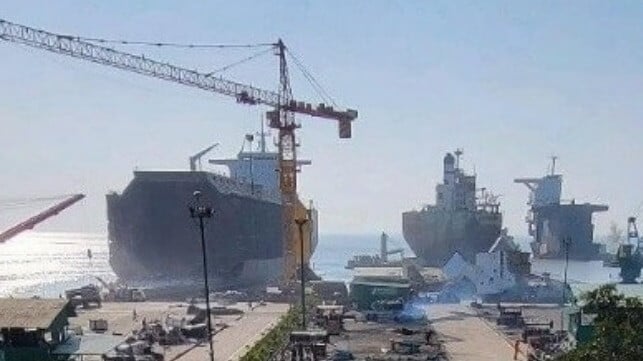 | | The Maritime Executive • The Maritime Executive • Jun 5, 2026 | | A 44,936 dwt product tanker named Maymei, destined for scrapping in Bangladesh with an estimated scrap value of $4.96 million, became stuck in anchorage after the U.S. State Department added it and its managers to Iran sanctions on May 28, citing prior loading of Iranian petrochemical products. The sanctions action has created legal and commercial uncertainty for the Bangladeshi scrappers and cash buyers who cannot complete the transaction, though scrapping the vessel would effectively remove it from service. The principal owner has reportedly agreed to take back the ship as the funds remain unreleased, marking a rare instance of a vessel failing to reach the recycling yard due to sanctions. | | Open Article | | |
|
| |
U.S. Imports from China Drop 40.7% in Q1 2026 as Tariffs Reshape Trade |  | | Global Trade Magazine » Global Logistics • IndexBox • Jun 8, 2026 | | U.S. imports from China fell 40.7% in Q1 2026 compared to the prior year, declining to $60.87 billion as tariffs redirected supply chains toward Mexico, Canada, and Taiwan, which now rank above China as U.S. trading partners. Despite the tariff strategy's intent to boost domestic manufacturing, the sector has lost jobs and the trade deficit persists at $60 billion in March 2026. The trade disruption has raised core goods prices 2.8% annually, pushing inflation above the Federal Reserve's 2% target. | | Open Article | | |
|
| |
Oil Prices Slide as Israel-Iran Suspend Strikes |  | | Offshore Engineer • Jun 9, 2026 | | Oil prices fell 1.4-1.9% on Tuesday following Iran and Israel's announcement of a temporary halt to attacks, though both nations cautioned hostilities could resume. Analysts note the market has experienced similar false signals, and underlying fundamentals remain tight, with global oil inventories critically low and the Strait of Hormuz largely blocked by Iran. China's crude imports dropped 29% to eight-year lows, partially offsetting supply concerns as refiners draw on reserves. | | Open Article | | |
|
| |
The Cost of Factory Closures — and the Case for Rebuilding | | Industry Today • Melissa Burge • Jun 3, 2026 | | Since 2000, the U.S. has lost over 70,000 factories and 6 million manufacturing jobs, significantly impacting communities, supply chains, and industrial competitiveness. A whitepaper by Chris LaCorata examines the lasting consequences of factory closures and risks from offshoring while exploring opportunities for rebuilding through reshoring, modernization, and local economic development. The analysis presents a case for strengthening manufacturing resilience and competitiveness through strategic reinvestment. | | Open Article | | |
|
| |
Grain handling must match bigger combine size | | The Western Producer • Robert Arnason • Jun 5, 2026 | | Large combines require supporting grain handling equipment that matches their capacity to maximize productivity and justify their significant investment. Farmers must consider the entire harvesting system, not just the harvester itself, to avoid bottlenecks that reduce efficiency. Proper coordination between combine size and grain handling machinery is essential for optimal performance and return on equipment costs. | | Open Article | | |
|


